DinoFrontier
About Brachiosaurus
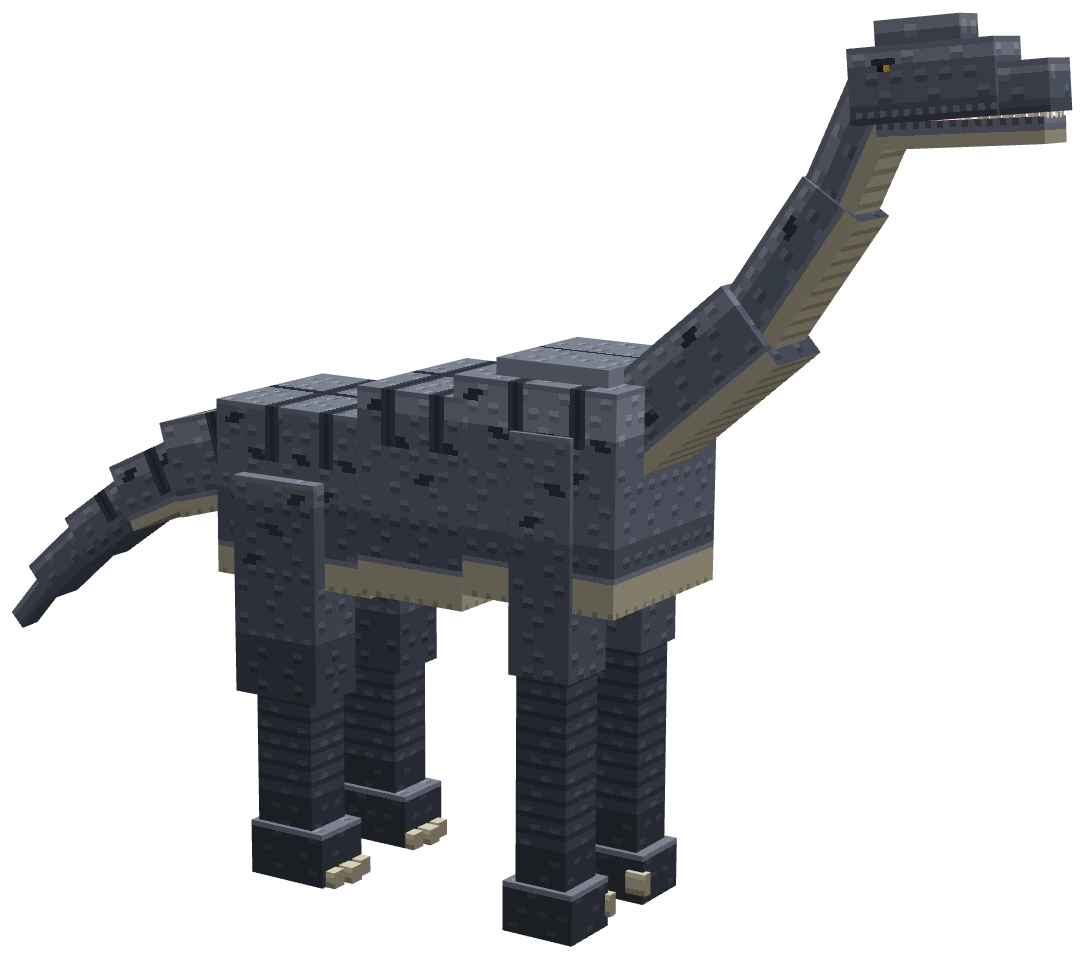
Brachiosaurus was a giant long-necked sauropod of the Late Jurassic Morrison Formation, the same ecosystem as Stegosaurus, Allosaurus, Diplodocus and Apatosaurus. Its name refers to its unusually long front legs, which were longer than its hind legs and gave it a sloping, giraffe-like back.
With its neck held upright it could probably browse at around 9 metres or more above the ground, reaching foliage that no other plant-eater of its time could touch. Air sacs extending into its vertebrae made the huge skeleton lighter than it looks.
Brachiosaurus is known from fewer fossils than many people expect. The holotype is a partial skeleton, and much of its popular image comes from its African relative Giraffatitan.
Brachiosaurus facts
- The African "Brachiosaurus brancai" skeleton in Berlin was moved to its own genus, Giraffatitan, in 2009, so true Brachiosaurus is only known from North America.
- Its nostrils sat in a raised bony arch on top of the skull, a feature once wrongly thought to mean it lived in water.
- Like other sauropods it swallowed leaves with little chewing and relied on a huge gut to ferment them.
- It hatched from eggs only about the size of a football and grew to tens of tonnes.
Discovery
Elmer Riggs and his team from the Field Columbian Museum (now the Field Museum) dug up the first skeleton near Grand Junction, Colorado, in 1900, at a site now called Riggs Hill. Riggs named it Brachiosaurus altithorax ("deep chest") in 1903.