DinoFrontier
About Stegosaurus
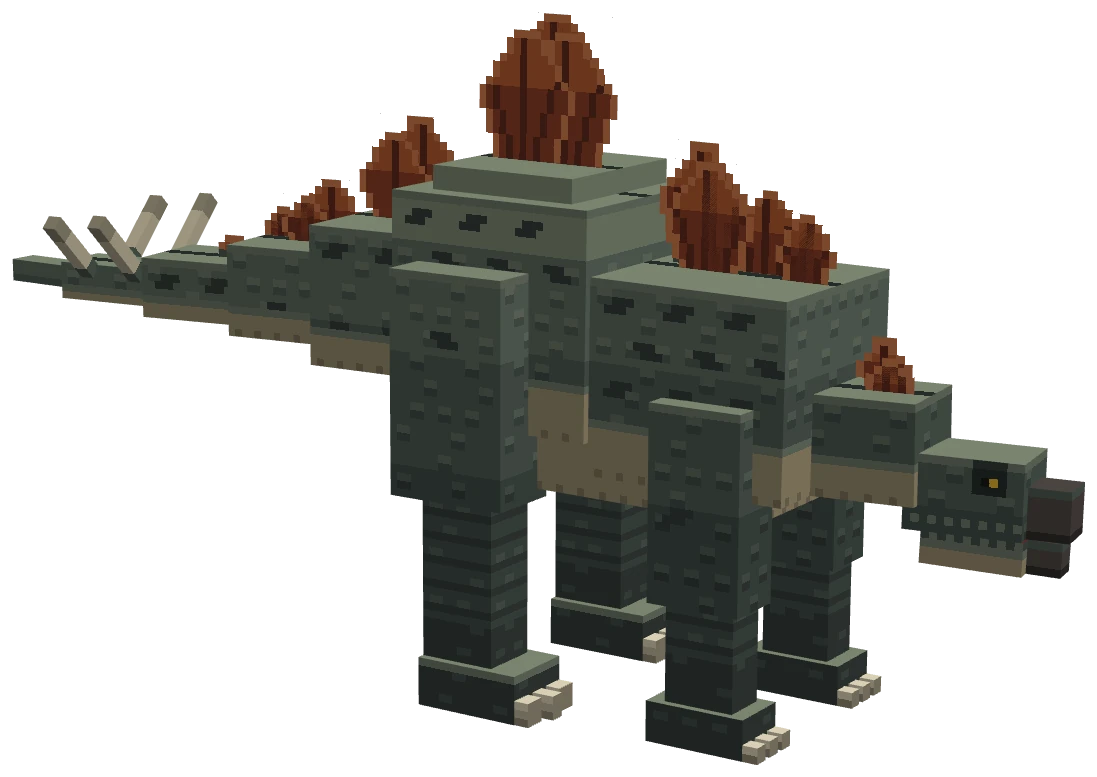
Stegosaurus is instantly recognisable by the two rows of tall, alternating plates along its back and the four long spikes at the end of its tail. It lived in the Morrison Formation floodplains of the Late Jurassic, alongside Allosaurus, Brachiosaurus and Diplodocus.
Its head was small and low to the ground, ending in a toothless beak, so it most likely fed on low vegetation. The hind legs were much longer than the front legs, which raised the hips high and kept the head near the ground.
The plates were not armour. They were thin, filled with blood vessels and covered in keratin, and were most likely used for display. The tail spikes, however, were real weapons.
Stegosaurus facts
- An Allosaurus tail vertebra in the Natural History Museum of Utah has a puncture wound that matches the shape of a Stegosaurus tail spike.
- The spiked tail is called a "thagomizer", a word that began as a joke in a 1982 Far Side cartoon by Gary Larson and was later adopted by palaeontologists.
- Its brain was famously small, around the size of a lime, but Stegosaurus survived perfectly well for millions of years.
- "Sophie", the most complete Stegosaurus skeleton ever found, is on display at the Natural History Museum in London.
Discovery
Arthur Lakes found the first bones near Morrison, Colorado, in 1877, and O. C. Marsh named Stegosaurus that year, thinking its plates lay flat over its back like roof tiles. S. stenops, named by Marsh in 1887 from a nearly complete skeleton, became the official type species in 2013.