DinoFrontier
About Vampyronassa
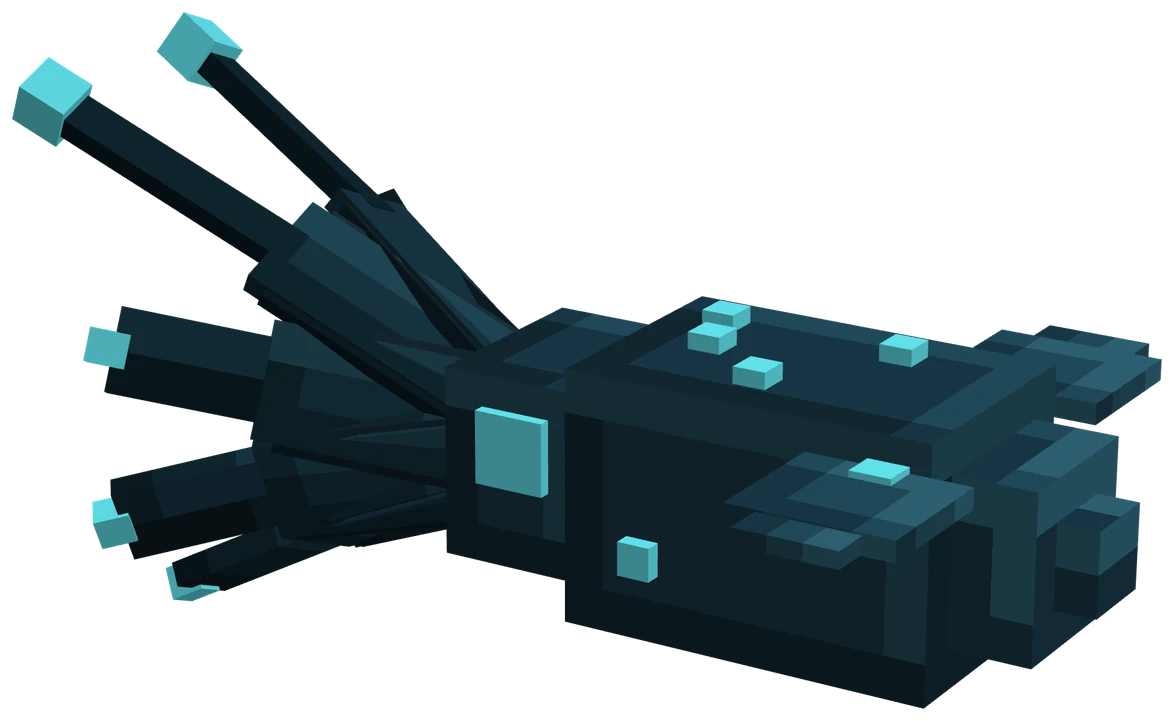
Vampyronassa was a small cephalopod from the Middle Jurassic, an early relative of the living vampire squid, Vampyroteuthis infernalis, which today lives in the deep ocean.
It had a compact body, two small fins and eight arms with suckers, two of them longer than the rest. Unlike its living relative, Vampyronassa had a more muscular body and was likely an active predator.
It is known from the La Voulte-sur-Rhône fossil site in France, famous for preserving soft-bodied animals in extraordinary detail.
Vampyronassa facts
- La Voulte-sur-Rhône preserves soft tissue so finely that even the cephalopods' arms and suckers can be seen.
- Its living relative, the vampire squid, is neither a squid nor an octopus but the last survivor of its own order.
- Light organs are not preserved in fossils, so whether Vampyronassa glowed like the vampire squid is unknown. The glow in DinoFrontier is an artistic choice.
- Its name combines "vampire" with the Latin nassa, a wicker fish trap, referring to its long arms.
Discovery
Jean-Claude Fischer and Bernard Riou described Vampyronassa rhodanica in 2002 from fossils collected at La Voulte-sur-Rhône in the Ardèche, south-eastern France.