DinoFrontier
About Goniopholis
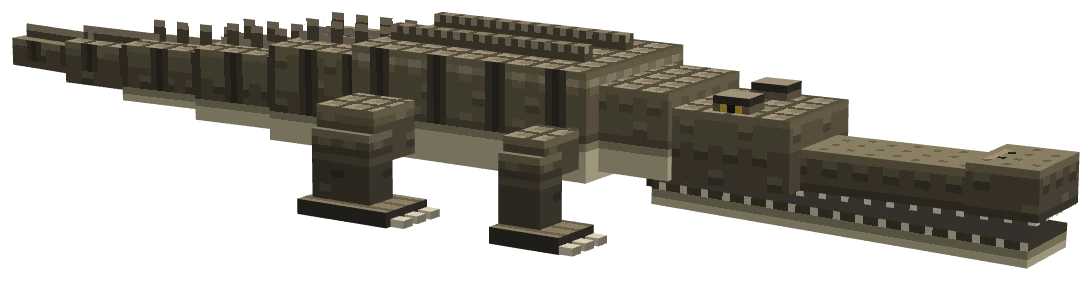
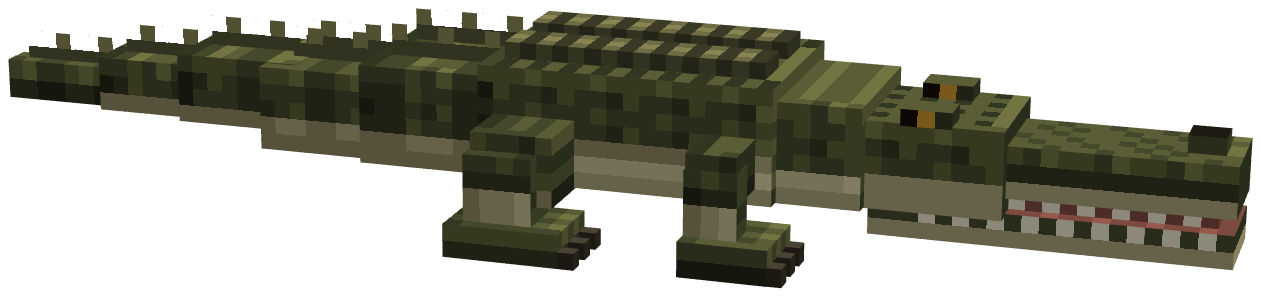
Goniopholis was a semi-aquatic crocodyliform that looked much like a modern alligator, with a broad, flattened snout and a low, sprawling body. It lived in rivers, lakes and swamps between about 155 and 140 million years ago.
Its back was covered by two rows of broad, rectangular bony plates (osteoderms) that locked together with a peg-and-groove joint. Modern crocodiles have a different, more flexible armour pattern.
Several North American crocodyliforms from the Morrison Formation were once named Goniopholis. They are now placed in the closely related genera Amphicotylus and Eutretauranosuchus, which shared the same swamps as Stegosaurus and Brachiosaurus.
Goniopholis facts
- The oldest species, Goniopholis baryglyphaeus, comes from the Late Jurassic of Portugal, about 155 million years ago.
- Goniopholis kiplingi is named after Rudyard Kipling, for his interest in natural science.
- Bone histology and isotope studies suggest it was cold-blooded, like living crocodiles.
- Its family, the goniopholidids, were among the most common crocodyliforms of Late Jurassic rivers and swamps.
Discovery
Richard Owen named Goniopholis in 1841 from fossils found in southern England. More species followed from England, Germany and Portugal, and several Morrison Formation crocodyliforms first described as Goniopholis were later moved to their own genera.