DinoFrontier
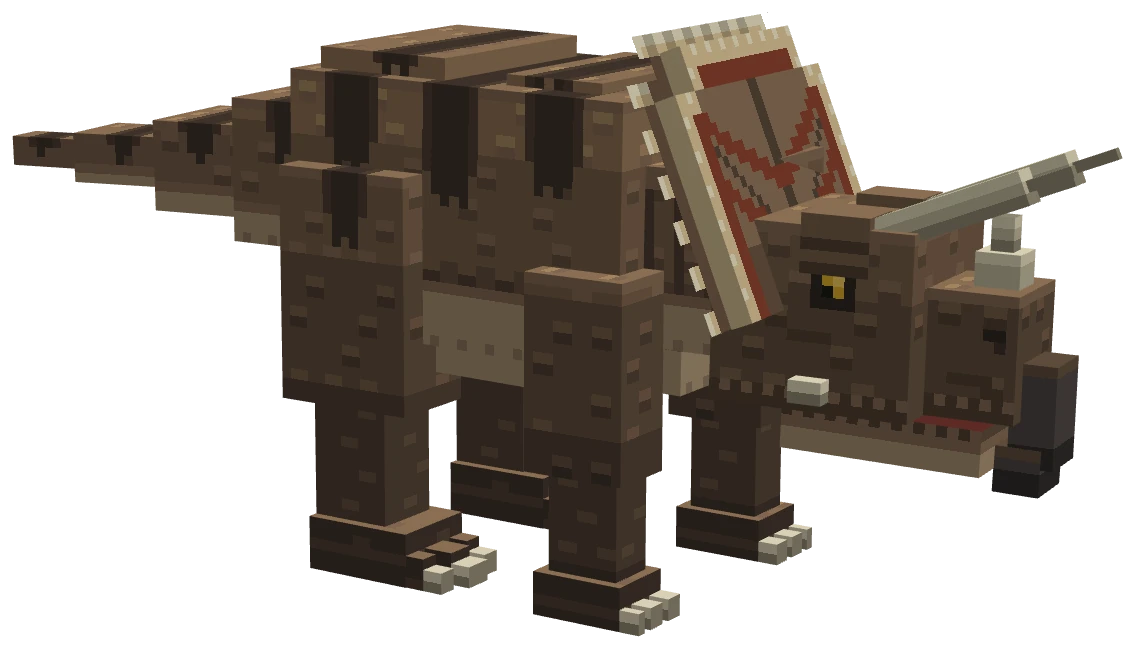
About Triceratops
Triceratops was a massive plant-eater and one of the most common large dinosaurs in the Hell Creek Formation. It shared its world with Tyrannosaurus rex, and the two are found in the same rocks right up to the end of the Cretaceous.
Its skull was one of the largest of any land animal, reaching around 2–2.5 m long. Two brow horns could grow to about a metre, a shorter horn sat on the nose, and a solid bony frill swept back over the neck. A parrot-like beak cropped vegetation, which rows of tightly packed, self-replacing teeth then sliced up.
Researchers still debate what the horns and frill were for. Healed injuries on frills and skulls fit with Triceratops locking horns with each other, while the frill may also have been a display to attract mates and recognise its own species.
Triceratops facts
- Each jaw held tooth batteries: stacked columns of teeth that were constantly replaced, giving it hundreds of teeth over its life.
- Marsh first described a pair of Triceratops brow horns in 1887 as belonging to a giant bison, Bison alticornis.
- Triceratops bones with healed and unhealed T. rex bite marks show that tyrannosaurs fed on them, and sometimes failed to kill them.
- Its skin had large, rounded scales. Some may have carried a central conical point.
Discovery
The first skull was collected in Wyoming by John Bell Hatcher, working for O. C. Marsh, who named Triceratops horridus in 1889. Since then hundreds of specimens have been found, making Triceratops one of the best-known dinosaurs from the end of the Cretaceous.